Just another reason giving mental health first aid training is so rewarding – because even though awareness is improving, there’s still a gaping need for greater awareness of mental ill health at management level. 85% of managers feel responsible for employee wellbeing yet at least 50% aren’t receiving any kind of training to execute this duty of care – that’s despite at least 1 in 4 of us experiencing mental ill health every year in the UK and 99 million sick days being taken due to mental ill health every year.
Aside from the prevalence of mental ill health, managers are the role models of organisations and they have a huge effect on employee wellbeing and mental health. They also have the power to implement organisational policy and make positive change. There are so many more stats which make a no brainer business case for mental health first aid training including unsupported mental health costing the UK economy £36 billion a year and over 80% of line managers admitting they’d judge someone with a mental health condition. This is why the watch words of my training business are understand, create, transform. Because any transformation, organisational or otherwise, starts with understanding and having an action plan for change.
‘the Chartered Management Institute suggests workplace training should become a legal requirement.
Nearly half (49%) of managers have never received training on managing mental health in the workplace, according to a survey by the Chartered Management Institute.
Less than a third (30%) have received training in the last 12 months, the poll of nearly 950 managers found.
The survey also shows over half (51%) of managers have had a member of staff disclose a mental health problem, such as stress, anxiety and depression as well as rarer problems like bipolar, eating problems and post-traumatic stress disorder.
This means that over three fifths (62%) of managers who have had a member of their team disclose a mental health problem to them have either never received any training, or received it over 12 months ago, the CMI said.
CMI’s chief executive Ann Francke said there is very long way to go to make mental health training a part of essential workplace practice.
“Line managers play an absolutely critical role in supporting employees’ mental health and wellbeing. Employers are already required by law to provide training on physical health and safety. It’s time the same requirements applied to mental health,” she stated’.
I’m thrilled to announce that my first episode of the Toolkit For Happiness Podcast Series on How To Manifest Love is now live!
In my interview with the amazing creative, mentor and writer @viendamaria, she shares top tips including:
– How to disconnect from the past and open your heart to new loves;
– How to overcome blocks that are keeping you stuck;
– How to work out what you really want in a love match;
– Why your soulmate may be nothing like you imagine; and
– Why gratitude is so important in the game of love
This lady is an orb of light — one of the most enlightened souls I’ve encountered — and I’m so excited to share her tools for building happiness and finding love with you.
Never has manifesting love felt more important than it does this 2018, an age swamped by dating apps, social media pressure and the inevitable stress that comes with that.
This is why I’m more excited than ever about this podcast. With the above reaching almost epidemic proportions, the time has never been more ripe for a magic tool to expedite love. And I know it works because it’s worked for every person who’s truly engaged with the process, including me!
This podcast is for you if:
– You’re looking for love, ideally your soulmate
– You’re wondering how to move from deflation and disillusion to hope, action and results
– You want a tried and tested magic method which bypasses dating App disillusion and actually works
If that’s you or one of your friends, then send them this podcast – it may just be what you’ve been waiting for.
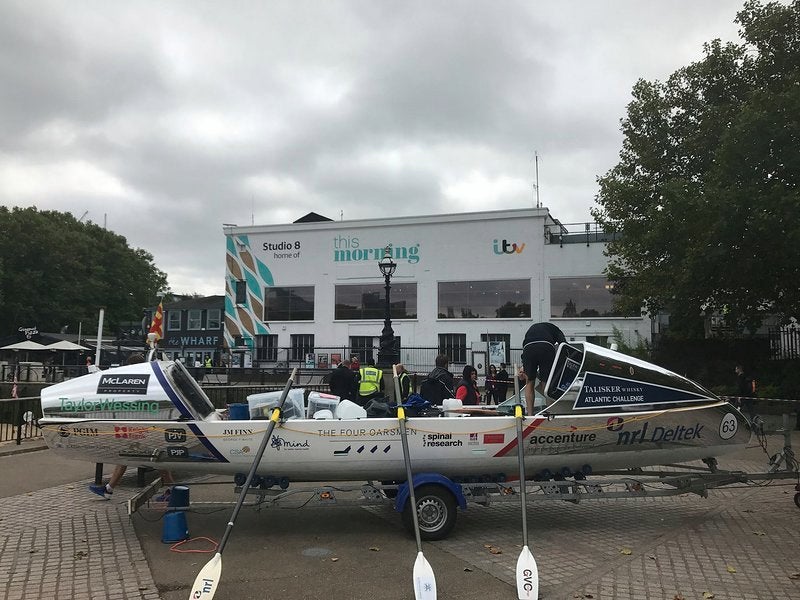
With 1 in 4 people in the UK experiencing a mental health condition each year, raising money for mental health charities like Mind is a no brainer. Add losing your mother to mental illness and rowing an ocean in her memory and you have a passionate tale of love and loss that’s hard to beat. Read on to see how 31 year old London lawyer, George Biggar, is squaring up to the biggest challenge of his life…
What Inspired You To Row The Atlantic?
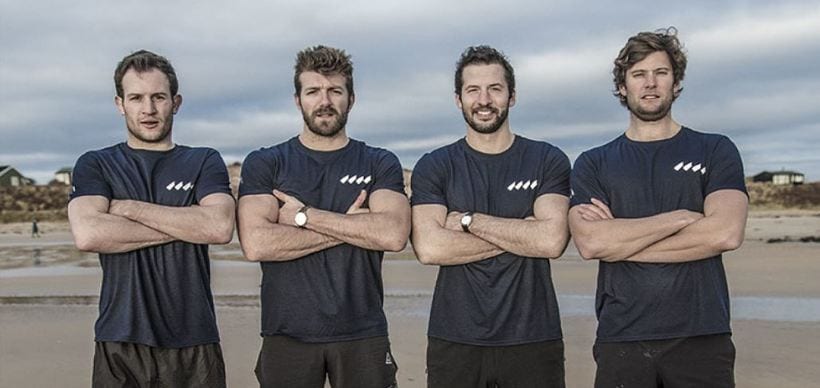
I’m rowing the Atlantic in memory of my mum, Anne Fisher, who passed away in 2011 after a lifelong battle with mental illness. At her funeral, my best friend Dicky and I decided we’d undertake a challenge in her memory and to raise funds and awareness for Mind, a charity which mum was a trustee for. Pete and Stu (two other great friends I’ll be rowing with), came up with the idea of rowing the Atlantic after cycling from John O’Groats to Lands’ End. They were hungry to undertake another endurance event and the next thing I knew, a WhatsApp group named ‘Atlantic Crossing’ had been created. After a few bravado-fuelled messages, the idea became a reality!
What Does The Crossing Entail?
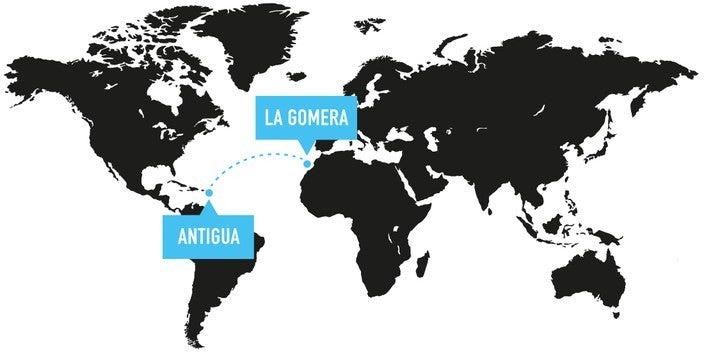
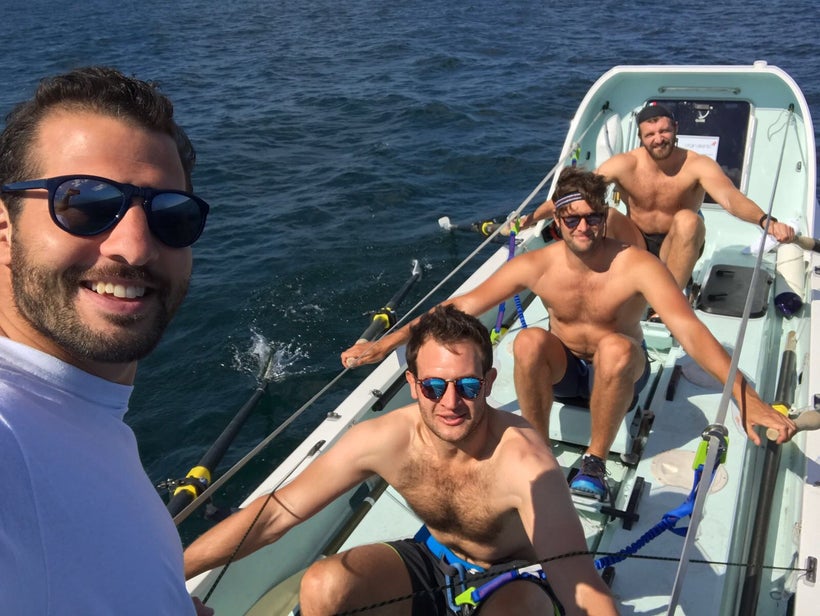
Dubbed the world’s toughest row, the Talisker Whisky Atlantic Challenge is an unsupported 3,000 nautical mile race across the Atlantic Ocean, starting on 12 December 2017 from the Canary Islands and finishing in Antigua. With more people having climbed Everest than have rowed the Atlantic, it’s one of the world’s greatest endurance challenges which will test us to our limits. The boat is only 26 feet long, accommodating the four of us who have a similar combined height. We will also be carrying all our food on board with us, including 720 dry ration packs, 320 wet ration packs, 40kg of macadamia nuts, 18 kg of almonds, 11 kg of coconut shavings, 40 litres of coconut oil, as well as 3 kg of Sudocrem to deal with inevitable chafing. We’ll be adopting a pattern of rowing in pairs for two hour shifts and then sleeping for two hours for up to 50 days. Given our limited experience of ocean rowing, it’s hard to know how we’ll fare but we’ve spent 18 months preparing for the row and aim to reach Antigua ahead of the other 27 teams!
What’s Your Greatest Fear?
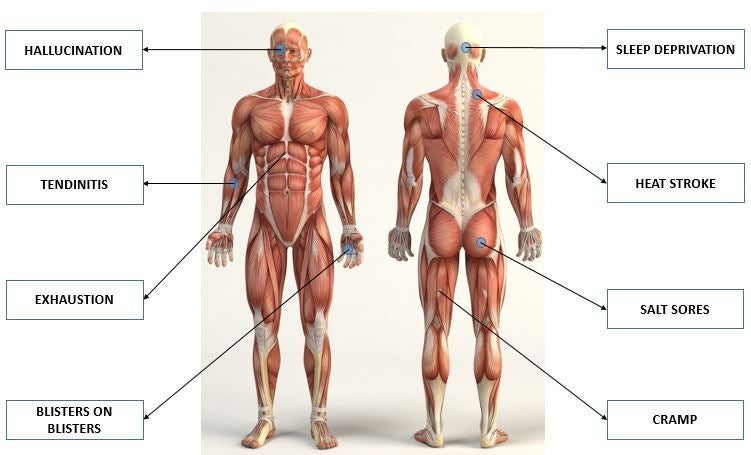
Rowing for mum will be therapeutic but also triggering, especially when tired. In terms of our greatest fears, we’re told by people who’ve done it previously that we’ll feel incredibly fatigued, with a constant, dull pain in our muscles and that, in itself, is mentally exhausting for up to 50 days. The general scope of the challenge is also pretty terrifying – 3,000 miles of open ocean for a month and a half! The waves will be up to 40ft high, with storms, seasickness, sharks and very cramped conditions but everything that scares us about the challenge is also what spurs us on.
How Will You Cope At Your Lowest Ebb?
When you undertake a challenge driven by emotion, there’s an underlying strength you can call on when things get really tough. So the fact we’re doing this for personal reasons will really help us when we reach our limits as will the close friendship the four of us have. We’ve spent so much time together over the last 18 months that we have a complete understanding of what each other are thinking. We also have complete trust that we’ll all be trying our hardest so if someone’s struggling, it’s because they’re genuinely finding it tough. It’s up to the other three to find that extra resilience in those moments. Finally, we’ve got a number of mantras on the boat which will help push us through. ‘Remember why you’re doing this’ will be up there in lights!
How are you preparing for the crossing?
I’ve found there’s an extra hour in every day if you look for it but this has meant we’re working 10 – 12 hour days, then fitting in two hours at the gym till 10pm at night, then coming home to deal with emails and getting up at the crack of dawn to fit in a couple of hours of admin before work. It has been a huge undertaking over the last 18 months but now we’re near the start line we feel like a lot of the hard work is now behind us – just the row to conquer now!
How Much do You Need to Raise And How Much Have You Raised So Far?
Taking part in an ocean rowing race costs in the region of £120,000. Race entry costs about £20,000, the boat costs about £50,000, the food is about £13,000, shipping the boat to the start line is about £4,500 and shipping it from the finish line back home costs another £5,500, so there’s a lot of money to find before you can even consider taking part. However, with a huge amount of support from a number of companies, our friends and family, we’ve managed to outstrip the costs and make some serious money for our charities. Initially we aimed for £50,000, then £100,000, then £200,0000 and now £250,000 which we recently hit in donations for Mind and Spinal Research. We’re incredibly grateful for the support we’ve had but it doesn’t stop here – we want to make as much as we can!
What’s The Hardest Part of The Training?
The training requires round the clock commitment, involving a lot of rowing on the Thames, weight training in the gym and arduous rows in the gym. One of the most challenging aspects has been adapting to a ketogenic diet plan for the row which means ditching carbohydrates and sugars and focusing on eating as much fat as we can. I’m a bit of a foodie so this has been a real struggle! Having the odd bag of pork scratchings at the pub as a naughty snack is all very well but when you are force feeding yourself 3 packets a day between meals or whole blocks of cheddar, it’s slightly less enjoyable! That said, when we arrive in Antigua and plough into burgers and chips, it will be worth it!
What Will You do When You Reach The Finish Line?
We’re bound to feel home sick during the 40 – 50 days at sea so seeing friends and family at the finish line will be as overwhelming as completing the challenge. That’ll be swiftly overtaken by a huge craving for a burger and a beer, I imagine! Then we’ll have a period of recuperation before hopping back on the plane and facing reality. People keep asking whether this will be a one-off life experience or the start of many endurance events. For me, this is more about commemorating my mum than satiating an endurance junkie drive, but never say never!
How Can we Support You?
We’d love you to spare what you can and donate to Mind and Spinal Research through our website – www.thefouroarsmen.com/donate. Awareness is also paramount to the work that these charities do, so please spread the word about what we’re doing and why. The last year has seen huge discussion around mental ill health and the misplaced stigma around it; if we can keep this conversation going it will be a huge achievement.
I just read a beautiful article by the lovely Rachel Brathen, the hugely popular yogi based in Aruba otherwise known as Yoga Girl. Instead of re-creating these top wellbeing tips myself, check out Rachel’s 5 favourite wellness practices you can implement into your daily life. In the busy run-up to Christmas, these will be just what you need to slow down, tune in and stay centred:
1 – Create sacred mornings. Give yourself the time and space needed to have time to start each day off right. Light a candle, sit in meditation for a few minutes, practice yoga, eat a good breakfast. Set your intentions for the day! Rushing out the door sets a hectic tone for the day. Make your mornings sacred and the rest of the day will follow suit.
2 – Drink hot lemon water in the mornings. It works! Think of it as a way to completely reset your system, so anything you ingest after that (coffee, breakfast, a bagel munched down on the train on your way to work) will have a better chance of settling in a good way. Don’t bring yesterday with you! Hot water with lemon is cleansing, gets you metabolism started and gives your body a fresh start.
3 – Practice yoga. I’m not saying you have to be a super yogi and spend 90+ minutes sweating on your mat every single day, just do what makes you feel good! 30 minutes a few times a week on your mat at home is a great start. Focus on the parts of your body that feel tight or sore and that you know need a little bit of extra love. Or go to take a class at a studio close to your home! Creating community is a big piece of making yoga a permanent routine in your life.
4 – Let yourself feel. By this I mean – allow yourself to have ups and downs! Don’t push things down below the surface but make space for your emotions. Holding in frustration, pain or grief is the fastest way to ensure bad health. Our physical bodies are a perfect manifestation of how we feel within, so take care of your heart! Speak to friends about things that trouble you. Write a journal. Share! It will make you feel lighter.
5 – Be thankful. By focusing on the beautiful things we already have in life, we start attracting more of the same! Keep your attention on the positive, and say thank you as often as you can. Gratitude is the best attitude.
Thank you for a beautiful reminder of things we can do to stay happy day to day, Rachel. For more where that came from, check out her super cute website here!
Much of the scientific research on resilience — our ability to bounce back from adversity — has focused on how to build resilience in children. But what about grown-ups? This article in the New York Times gives 7 top tips on how to build resilience and improve your life. The second and the last one are my particular favourites 😉
“I never cease to be amazed by the power of the coaching process”
John Russell, Managing Director, Harley Davidson Europe
If, like me, your first impression of coaching was some wacky American self-help thang full of hot air, you wouldn’t be the first.
And I’ll bet my bottom dollar you won’t be the last to eat your words when you realise that:
“People, unless coached, never reach their maximum capabilities”
Bob Nardelli, CEO, Home Depot
And by people, I’m talking clients from all walks of life – Cambridge graduates, company directors, school leavers and cynics. Like my highly successful friend who was dismayed he couldn’t become a Partner at his FTSE 500 company without a coaching session. After an hour with the coach, he soon changed his mind.
If, like him a year back, you’re wondering what coaching is all about or how it could serve you with results based goods, check out some kind words below which walk you through the process ☄
“Melanie was incredibly helpful; she was insightful, she was understanding, and helped me to think of ways round issues and problems I had, or perceived I had!
She invited me to examine how the various areas of my life informed each other, and this was very revealing. I consider myself an insightful person, but she helped me to look at things truly; often it takes someone else to really reflect things to us.
She came from a very practical, yet empathetic stance, and was constantly encouraging. I felt that I could really take those small steps towards achieving what I wanted to achieve, and that it wasn’t as daunting as I had thought.
I think I had a tendency to over complicate things, and also to expect too much of myself. She helped me to break it down into small achievable goals, many of which I have now achieved.
Her knowledge, natural intelligence, warmth and wisdom gave me confidence that she believed in me, and therefore I should believe in myself a bit more!” –
Clare, Freelance Performer & Consultant, London
To check out how sessions work, pop on over to the ‘Services – Individuals’ page of my website.
“You can’t calm the storm, so stop trying. What you can do is calm yourself. The storm will pass”
Timber Hawkeye
Happy Tuesday, almost hump day! I read this article recently which I absolutely loved by Pop Sugar – “13 Stress-Inducing Habits and How to Avoid Them”. It’s full of practical ideas which bring balance to over-stretched lives (sound familiar?) – mentally, physically and most importantly – spiritually. Yes. It’s balm to the soul.
From drinking too much caffeine (you know that funny state of over alertness which conquers fatigue but can leave you feeling all kinds of sketchy…) to lack of exercise and constantly venting to friends (I’ve definitely been guilty of this in vulnerable moments – and it doesn’t always help) – these tips are as surprising as they are helpful.