This is Purpose: An Aristocrat’s Inspiring Quest to Change the World

Screenshot 2026 02 07 at 15.10.32


“A society is measured by the treatment of its prisoners”

 Winston Churchill


The article below exemplifies the impact economy + philanthropy at its very best – Lady Edwina Grosvenor, English aristocrat, criminologist + prominent prison reformer helping amongst the most vulnerable in society.

Despite a childhood of immense privilege, she is the founding investor + ambassador for The Clink Restaurant chain, which trains prisoners in catering. She is also the founder of the charity One Small Thing + Hope Street, a residential community designed to keep women + their children together, reducing the number of women in prison + addressing the root causes of trauma.

And while some prisoners may be written off as ‘evil’, the reality is:

– Incarcerated populations exhibit disproportionately high levels of childhood trauma, including abuse, neglect + household dysfunction (ACEs), which are heavily linked to adult criminality, mental health struggles + violence

– Studies show over 60% of young offenders report prior trauma, with high exposure to witnessing domestic violence (41%) or being in care (24%)

– 50% to 75% of inmates are functionally illiterate or have reading skills below 4th-grade level

The impact of the above is significant including:

Emotional Regulation: Trauma hinders the ability to manage emotions + cope with stress, leading to poor decision-making

Violent Tendencies: High scores in childhood trauma (physical/emotional abuse, neglect) are directly linked to increased, violent tendencies

Substance Abuse: Childhood abuse is strongly associated with substance abuse, which often leads to incarceration

Re-traumatization: Childhood trauma predicts higher rates of anxiety, depression + suicide attempts among prisoners, with standard prison environments often triggering past traumatic experiences, leading to hopelessness or anger

It’s easy to judge + polarise people as good or bad which is why her work is so important.

Like it or not, for many, criminal behavior acts as an often, sole, maladaptive response to internal chaos + past trauma.

As the outstanding Gabor Maté, Canadican physician, author + trauma expert says:

“If you study prison populations as I have, you see a common preponderance of childhood trauma and mental illness. The two go together. So a lot of the people are being punished for being mentally ill + they are mentally ill because they were traumatized as kids. So what we have in prisons are the most traumatized people in our society.”

Which is why, I suppose, in his superb documentary: “The Wisdom of Trauma”, he stresses the importance of asking prisoners:

“What happened to you?”

v

“What did you do?”

Why does this kind of attitude matter?

Because most decent people care about peace +, cheesy as it sounds, leaving the world a better place.

In the words of Barack Obama:

“Learning to stand in somebody else’s shoes, to see through their eyes, that’s how peace begins. And it’s up to you to make that happen. Empathy is a quality of character that can change the world.”

Read the article in The Independent: “It’s a complete scandal’: The aristocrat fighting to help prison children escape the stigma of crime” here


How Important is Money to Happiness?

“Try not to become a man of success, but a man of value”

Albert Einstein 💡

I wonder what my sassy lil niece, Flora, aged 4 going on 24, would have to say about that..

💵 What does success mean to you?

💵 How important is money to you?

💵 To what extent does it feed your happiness?

💵 Are wealthy folk you know happier in their lives or careers?

💵 Or are the happier people you know content with less?

Or like some of my smart successful clients, do you feel trapped in the corporate cage – on a big salary with a big house and mortgage, maybe private school fees to pay but not loving your job and feeling unable to shift paths cos of those liabilities?

If you relate to that, you may associate money more with entrapment than freedom.

Or like the protagonist in Robin Sharma’s superb bestseller: ‘The Monk Who Sold his Ferarri’, maybe you identify with the lawyer whose work nearly killed him and woke him up to a different way of living entirely?

This all begs the question, what does success and income really mean to you and what’s the relationship between the two?

Is baby Flora on to something above?

Afterall, studies on the relationship between income and happiness show that while money generally increases wellbeing, the ‘minimum’ amount required to reach peak emotional happiness is generally identified around $60k – $95k annually and thereafter happiness can go either way.

Of course (came out as ‘of curse’ 🤔), few things in life are black and white – for instance, let’s say you sell a business for £4million, you may think you’re rich for life or it’s a nice nest egg to have – but if you then have a large mortgage to pay, four children at a fee paying school, pricey holidays, lots of meals out and say a child with special needs or health requirements, that pot can be both valuable and also quite disposable fast.

And what if the folk earning that nearly keel over scaling a business with investors to answer to and strained mental health that make them a less present parent and partner?

What does success look like then?

Is it more about net income – what’s left when we minus the costs and expenses, whether actual or emotional, than our gross salary in the first instance?

For example, when I was in law I noticed I was playing to leading strengths and interests but I felt much less connected to my emotions and had v little time to feed wider values like fun, wellbeing, love and family. The latter concerned me greatly deep down and ended up being key to my decision to leave.

In other words, the net income seemed disproportionately low to me once I’d minused the expenses.

I also noticed, though not true for everyone, long hours meant higher divorce rates around me and greater internal imbalance.

Now working as a coach with many high flyers, I often see the trappings of outer success – the six figure salaries and LinkedIn profiles that wow and may leave others feeling ‘less than’ – but im privy to the sometimes shadow side of that ‘success’ and the cost it sometimes comes at – such as high level stress, lack of work life balance and disconnection from values and higher purpose.

This often shows up in clients wanting to shift paths in a way that maintains income but with greater work life balance and making more of a difference in some way – relatively unsurprising given these are two commonly held regrets of the dying when not sufficiently met in life according to Bronnie Ware, palliative nurse and bestselling author of “The Top Five Regrets of the Dying”.

But it’s not black and white.

My dad was a successful entrepreneur who was always home by 6pm, had few wrinkles, nice cars and plenty of family time.

Again, it’s a question of intentional life design and moving in accordance with deeper values you must meet for true fulfilment.

Most people I work with have never truly considered what those deeper drivers may be – why would we if we’re never asked.. and they only get hints of misalign from helpful emotional signals like frustration, burnout or boredom before we talk.

However, they initially often don’t know how to get deeper clarity on those feelings, how to make changes or how to do so in a strategic way that meets other values like the need for a good income and the wider realities of adult life.

So I ask again, what does success really mean to you?

Whose lives or careers do you envy and why?

And do you truly long for more of that or is it more ego than truth?

We’re all different in this respect – and, for some, it’s only on the deathbed that they get true perspective on what really mattered, as Steve Jobs did:

“In the end, wealth is only a fact of life I am accustomed to. Being the richest man in the cemetery doesn’t matter. Treasure love for your family, love for your friends. Treat yourself well. Cherish others”.

The Top 5 Regrets of The Dying + Why Death Shows Us How to Really Live

No alternative text description for this image


“Cancer need not be the epilogue. In many ways, it’s the introduction to a richer life of wisdom”

Matthew Pritchard ☁️


To mark the 25th anniversary of my brother’s death at 23, and to make sure that you also make the most of life, check out the top five regrets of the dying observed by the best-selling author, Bronnie Ware. These bore true of her time in palliative nursing irrespective of people’s rank, profession or otherwise:

1. I wish I had had the courage to live a life true to myself, not the life others expected of me.

“This was the most common regret of all. When people realise that their life is almost over and look back clearly on it, it is easy to see how many dreams have gone unfulfilled. Most people had not honoured even a half of their dreams and had to die knowing that it was due to choices they had made, or not made. Health brings a freedom very few realise, until they no longer have it.”

2. I wish I had not worked so hard.

“This came from every male patient that I nursed. They missed their children’s youth and their partner’s companionship. Women also spoke of this regret, but as most were from an older generation, many of the female patients had not been breadwinners. All of the men I nursed deeply regretted spending so much of their lives on the treadmill of a work existence.”

3. I wish I had had the courage to express my feelings.

“Many people suppressed their feelings in order to keep peace with others. As a result, they settled for a mediocre existence and never became who they were truly capable of becoming. Many developed illnesses relating to the bitterness and resentment they carried as a result.”

4. I wish I had stayed in touch with my friends.

“Often they would not truly realise the full benefits of old friends until their dying weeks and it was not always possible to track them down. Many had become so caught up in their own lives that they had let golden friendships slip by over the years. There were many deep regrets about not giving friendships the time and effort that they deserved. Everyone misses their friends when they are dying.”

5. I wish that I had let myself be happier.

“This is a surprisingly common one. Many did not realise until the end that happiness is a choice. They had stayed stuck in old patterns and habits. The so-called ‘comfort’ of familiarity overflowed into their emotions, as well as their physical lives. Fear of change had them pretending to others, and to their selves, that they were content, when deep within, they longed to laugh properly and have silliness in their life again.”

If you think you’re too busy to consider the above, all the more reason to ⛵️

For as Steve Jobs, the man who ‘had it all’, warned:

“At this moment, lying on the sick bed + recalling my whole life, I realize that all the recognition + wealth that I took so much pride in, have paled + become meaningless”.

Confused about where to start with life or career change? Drop me a line: www.melanie-pritchard.com

A Powerful 3 Step Communication Hack to Optimise Relationships

No alternative text description for this image


“Good communication is the bridge between confusion and clarity”

Nat Turner 💡


I’ve never been one for sharing personal relationship stories on here – but this one is too good not to share.

I’m still friends with an ex-boyfriend below, probably cos he was a good friend to me and a very genuine guy.

And though our love story wasn’t meant to go beyond what it did, like all relationships, I learnt some valuable pearls o wisdom.

The main one being the value of calm communication. Note – the calm gentle tone was more vital than the words as per studies which show tone and body language account for 65% of communication’s impact, with words being only 35%.

Food for thought, hey?

That was definitely one of his superpowers – a bit like my dad, it was as if in that moment when others might have been angry or agressive (like when I snapped some skis he leant me 🫢), he did what Mr P advises:

“If someone is upset or doesn’t listen, repeat yourself slowly and calmly until they do”.

I’ve never, btw, heard my dad raise his voice once. Ever. No wonder I don’t do well with moody people 🫢

The What Why How handy communication tool below gives structure to the complex business o communication, boosting clarity, closeness and relationship success when you’re struggling to express something. It can also be applied at work 💼

Here’s how the 3 step formula goes:

🔦 What’s important to you

🔦 Why it’s important

🔦 How much of it you need (if relevant)

Continued below ⬇️

You can also ask it in questions if you’re getting to know someone professionally or personally:

For example:

🏈 What are two things that make you feel loved?

🏈 Why is that important to you?

🏈 How often need that?

How would you feel if someone asked you that?

How would it benefit you both?

Another example might be:

🍊 Being open about your worries is important to me

🍊Cos it builds my sense of trust n closeness

🍊 So I’d love it you could try to be open about stuff that’s worrying you when it’s weighing on your mind

What do you think?

What comes up for you if you apply it to pain-points in your life or work?

Simple tools like these can give a how to things that might otherwise block us and transform the complex into the simple.

In fact, often it’s not that we’re not good at communication – it’s a totally learnable skill – we just need the tools and willingness to be slightly vulnerable.

And what do we know about vulnerability?

It’s strength in disguise and it’ll always draw you closer to the right people and organisations 🏹

Try it n see 🪀

☘️ To upgrade your life or career, book a free discovery call: www.melanie-pritchard.com

The Simple Success Hack That May Surprise You

Screenshot 2026 01 23 at 15.14.13 1


“Attention energises, intention transforms”

Deepak Chopra 


Ever wondered why you’re unable to make change despite feeling frustration, boredom, anxiety or depression about your current life?

Here’s why 🤫

To make any big change in your life, you need to do more than recognise discomfort – you need to create the time, space and resources to get real clarity. From there, change becomes easy.

Ever wondered why people telling you what you should do rarely works? Because sometimes it comes more from a place of projection, protectiveness and bias than objectivity and real listening – truly sitting in the moment with you and really hearing what lies beneath is usually quite different, leaving you feeling heard, understood and pumped to uplevel your life.

This is exactly what I thought coaching wasn’t when I first started out. Honestly, I was hoping it was a quick fix involving talking to a wise owl who could help me cut corners and expedite change fast.

I couldn’t have been more wrong.

When I heard it was being guided by the coach asking a series of questions to help me work out who I was and what I wanted, I thought it sounded like hot air.

Then we started practising coaching – and I ate my words fast 🤭

I quickly realised helping someone connect to who they truly are and what they truly want versus telling them what they should do, is where the magic happens.

I see this kind of magic happen daily with clients – whether midwives moving into project management, financiers moving into consulting, lawyers moving into coaching or graduates moving into advertising and beyond.

It’s not rocket science, but boy does it work.

As a wise friend on Mindline once said, really active listening is like developing a sixth sense.

So I say again – attention energises, intention transforms. Finding space to be truly heard and to deconstruct what’s really going on for you is an essential component to creating the intention required for change.

So if you’re feeling misaligned with your life or career, what’s stopping you?

And if you’re still feeling stuck, remember, nothing changes if nothing changes 💫

Podcast Episode 12: Why Becoming a Mother is the Perfect Time to Start A Business

Sabine Matharu, Author at The Future Shapers

Episode 12 of The School of Success Podcast Series is now live! An inspiring and eye-opening deep-dive into why becoming a mother is the perfect time to start a business!

This interview with the accomplished Leadership Coach, Author and Workplace Wellbeing Creator, Sabine Matharu, teaches you:

– top tips for overcoming the limiting beliefs that stop people from launching their own businesses;
– what’s really going on in new mums’ inner monologues when they go back to work;
– myth-busting around the risks of launching your own business;
– how to use adversity to laser-focus new career goals and expedite health, wealth and happiness; and
– how organisations can better support working parents

This is also for you if you have an interest in how to optimise career clarity before making a change and how to find the killer weapons required to start and scale a business fast. This is also for you if you’re not sure what a Leadership Coach is and the main benefits of investing in one!

In this super informative interview, Sabine shares her expert wisdom from years as a management consultant turned successful author and entrepreneur working with women across a whole host of industries whether new mums, aspiring entrepreneurs or leaders in their field.

You can find Sabine at www.instagram.com/sabine.matharu/ on Instagram and at www.theempowermentportal.com. Her recent book, “Shift – A New Era Begins” can be found here: www.learnmoreabout.info/shift.

Full podcast episode here!

From New York Journalist to Farmer’s Wife: What The Dirty Life Teaches Us About Happiness

Good Husbandry by Kristin Kimball review – a new life on a community farm |  Society books | The Guardian

What are you?

A professional or an entrepreneur, a country bumpkin or a city slicker, a conformist or a free spirit? Or are you a hybrid – a suited and booted banker or lawyer with the ‘perfect job’ but a niggling desire to explore less well-trodden paths? Or maybe you’re just plain confused about where you fit and what really drives you.

Whatever category you fall into, most of us from Generation Y were bred by folks with far less opportunity than us professionally. With more conventional views of what constitutes a ‘proper’ job, our parents may have inadvertently left us stuck between a rock and a hard place – between what we should do and what we want to do. But ‘should’ is where it all goes wrong.

Expectations versus reality

OUR HOTELS IN NEW YORK

Nobody knows this better than Kristen Kimball, author of ‘The Dirty Life’ and former freelance journalist and Harvard graduate from New York. After a chance interview with a hunky farmer, she upped sticks to set up farm with her green-fingered interviewee, leaving the city lights and life as she knew it in her wake. You heard right – East Village in favour of mud and veg in the middle of nowhere. This is a story of two love affairs that interrupted the trajectory of an intellectual glamour-puss’ life – one with farming and the other with a man who milks cows for a living. A striking tale about love, happiness and the power of instinct, ‘The Dirty Life’ is a must-read for anyone feeling a little disillusioned with the daily grind or what life’s all about.

The product of a neat, middle-class world, Kimball’s novel charts the mental and physical challenges she faced leaving the glitzy world of ‘convention’ in favour of rural slog. ‘Writ[ing] with precision, authority and gratitude about what is evidently, despite its rigours, an idyllic life’ (New York Times Book Review), Kimball challenges our views about wealth, success and love, giving food for thought as compelling as the gastronomical delights she chronicles.

Kimball’s union with Mark, a rugged hulk of a man with a passion for food and farming, is a world away from the corporate sphere she might have settled into. But as with the different kind of ‘wealth’ she finds farm-side, Kimball takes us on a journey full of surprises, a journey which exposes some stark ironies about our perceptions of ‘success’ and ‘happiness’ of City life.

Does success equal happiness?

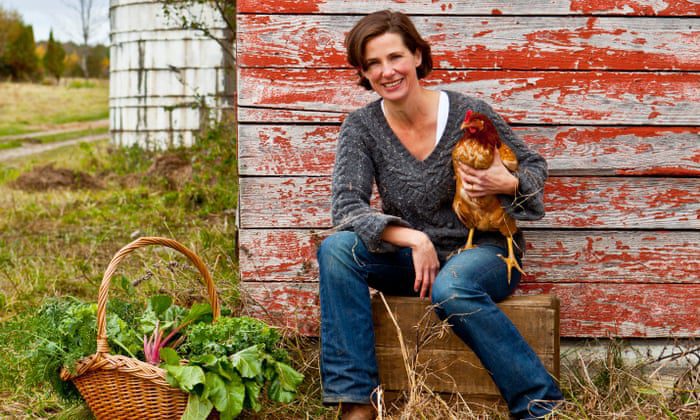
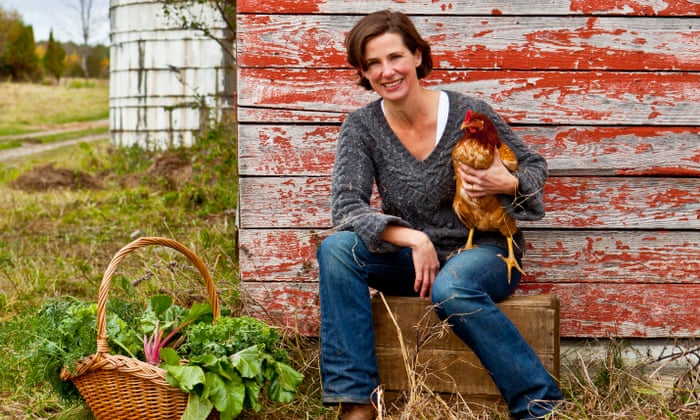
How to Get Hens to Lay Eggs in Nest Boxes

‘The Dirty Life’ makes us question our ‘values’ as we know them. In Kimball we find a cosmopolitan New Yorker who, like many of us, supposedly ‘has it all’. A woman with all the trappings of refinement, yet one who is, by her own admission, blinded by ignorance. Openly admitting her surprise that a ‘salt-of-the-earth-type’ person such as Mark could talk with dexterity and intelligence and that ‘the physical world – the trades’ was not in fact ‘the place you ended up if you weren’t bright or ambitious enough to handle a white-collar job’, Kimball shows us the danger of defining people by what they do. In Kimball we find a highly educated woman who has travelled the world with her job, yet whose eyes are opened by an entirely different world, stunned by the happiness she finds ‘pulling warm eggs out of a nest box’.

Shake things up…

So, what is the moral of the tale? Keep meeting new people, keep an open-mind and be true to yourself. Work out what is important to you and don’t be afraid to question reality as you know it. Have the courage to live a life true to yourself, not the life others expect of you and remember, the most successful life is one which unearths what makes you truly happy. Fulfilment goes far deeper than an impressive job title and it will bring you fruits that money can’t buy.

Watch an interview with Kristin Kimball here.


Podcast Episode 6: The Surprising Secrets of Entrepreneurial Success!

9a14f44a0dcfbd74b026ecf0935183da c5 720x720

“Entrepreneurship is living a few years of your life like most people won’t, so that you can spend the rest of your life like most people dream of”

Episode 6 of The School of Success Podcast Series with the one of a kind @jamie.lesinski is now live! Join us for a seriously open-hearted and generous insight into how to build your own business from the ground up!
💎
This inspiring interview with the wonderful Jamie Lesinski, founder of Prime Cap, the multi-award-winning property-related currency services teaches you:

– what kind of path you should take before launching your own business;
– what type of person is suited to being an entrepreneur;
– the struggles nobody talks openly about; and
– what type of person hits the jackpot where others fail.
💎
This is for you if you have an interest in setting up your own business one day. This is also for you if you’re not sure you have what it takes and want to hear the good, the bad and the ugly.
💎
In this warm-hearted interview, Jamie openly shares the keys to success, how he learnt these and why they may not be at all what you might expect.
💎
You can find Jamie @jamie.lesinski on Instagram and at www.primecappayments.com
💎
Be warned, Jamie is an inspiring example of drive, creativity, innovation, likability and everything in between!

Listen here!

#health #wealth #happiness #success #entrepreneurialism #selfmade #business #property #finance #currency #happy #lifestyle #successful #entrepreneur #entrepreneurlife #entrepreneurs #entrepreneurmindset

THE GREAT CAREER REVEAL: WHAT COVID19 TEACHES US ABOUT SUCCESS

NINTCHDBPICT000578631794 2
“Often in the chaos of daily life we don’t have an opportunity to think about our purpose”
Jonathan Moult, Lawyer turned Counselling Psychologist
 
Despite the many negatives of the pandemic whether financial, professional or human loss, Covid19 has revealed one great pearl of wisdom: that the best paid are not essential, raising some serious questions around the notion of purpose, meaning and value.
 
Turning commonplace norms around social status, service and worth upside down, the pandemic has triggered soul-searching among financiers, lawyers and other esteemed white-collar workers who may have previously measured value (and been valued) in terms of net worth and social status. This begs the question, what is success?
 
Read my article for Thrive Global here to see the fatal flaw that causes most career unhappiness and harness this universal pause to get clear on what purpose, value and meaning mean to you.
 

Podcast with Vienda Maria: How To Manifest Love

29315101 10155043122350916 7294762920146108416 n

I’m thrilled to announce that my first episode of the Toolkit For Happiness Podcast Series on How To Manifest Love is now live!

In my interview with the amazing creative, mentor and writer @viendamaria, she shares top tips including:

– How to disconnect from the past and open your heart to new loves;
– How to overcome blocks that are keeping you stuck;
– How to work out what you really want in a love match;
– Why your soulmate may be nothing like you imagine; and
– Why gratitude is so important in the game of love

This lady is an orb of light — one of the most enlightened souls I’ve encountered — and I’m so excited to share her tools for building happiness and finding love with you.

Never has manifesting love felt more important than it does this 2018, an age swamped by dating apps, social media pressure and the inevitable stress that comes with that.

This is why I’m more excited than ever about this podcast. With the above reaching almost epidemic proportions, the time has never been more ripe for a magic tool to expedite love. And I know it works because it’s worked for every person who’s truly engaged with the process, including me!

This podcast is for you if:

– You’re looking for love, ideally your soulmate
– You’re wondering how to move from deflation and disillusion to hope, action and results
– You want a tried and tested magic method which bypasses dating App disillusion and actually works

If that’s you or one of your friends, then send them this podcast – it may just be what you’ve been waiting for.

hi there.
i'm delighted to
have you here!

To join the Community for Insider Access + a Monthly Newsletter full of advice + inspiration, just hit the button below!

Remember, you don’t have to get it perfect, you just have to get it going.

Warmly,

Melanie